Blood Work: A tale of medicine & murder in the scientific revolution by Holly Tucker is more than just a history of blood transfusions. It is more than historical nonfiction wrapped up in scientific jargon. It is a political discourse on humanity and its moral and political evolution. The same issues that plagued people in the 17th century seem to be plaguing us today. Is it morally wrong to experiment on humans if it will help the human race as a whole? Is it an abomination against God to put animal's blood inside of a person's body in the hopes that it will help them to survive? I have no idea if this book will even come close to answering these questions but I'm fairly positive it will raise even more intriguing questions while delivering a fascinating depiction of science unfolding.
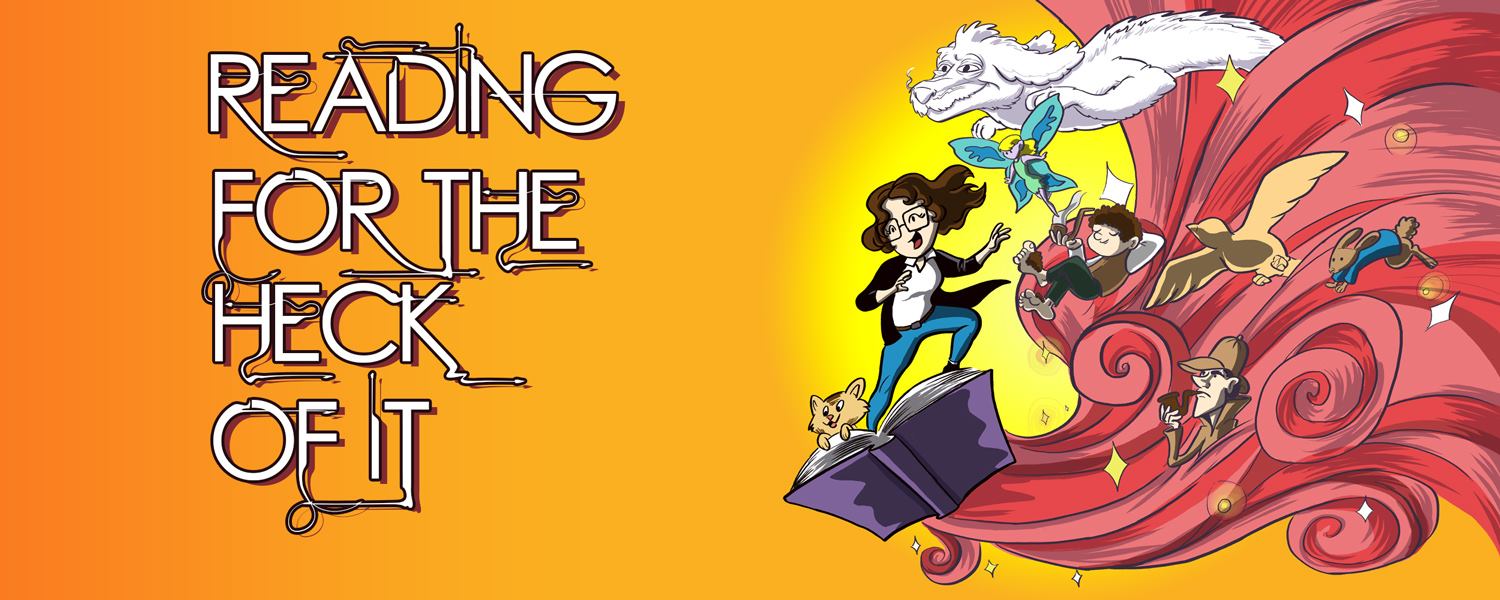
I have a varied taste in literature. I read everything from children's literature to science fiction/fantasy to nonfiction. In this blog I'm going to discuss the books I'm currently reading as well as give recommendations based on books I've already read. Need a rec? Well, just ask!
Showing posts with label James Barrat. Show all posts
Showing posts with label James Barrat. Show all posts
October 15, 2013
I almost wish this WAS only science fiction
Artificial Intelligence, or AI, is not something only relegated to science fiction. It is a reality. Most people immediately think of their smartphones but what about the machinery that powers cities? Would you consider that to be a facet of AI? It could be argued that because many pieces of an electrical grid are run without human interference (or understanding as to why certain parts work the way that they do) that it is a type of AI. However, the book Our Final Invention is about what happens when AI turns from AGI (Artificial General Intelligence) to ASI (Artificial Super Intelligence). At that stage, machinery becomes self-sufficient, self-aware, and self-improving. It's surpassed human intelligence and can continue to improve itself and become even more intelligent. Barrat believes that at this point the machinery which should not be compared to humans will not have "feelings" about its creators. It will wipe us out in its quest to fulfill its own goals and agendas. Replication on a global scale will occur and all matter than can be used for that purpose will be used even if that matter is humanity as a whole. There are some decidedly scary concepts housed within the pages of this book. As if to ram the point home I ran across this article today which talks about the rapid growth of Artificial Intelligence and how the vast majority of the populace is completely unaware of the advances being made RIGHT NOW. Chilling, eye-opening stuff. Conspiracy theorists will be eating this book up.

September 29, 2013
SCIENCE!
Well, when he titled it My Brief History, Stephen Hawking wasn't kidding. It was very brief. It's difficult to review because I felt like it only skimmed the surface of his life. It started with his childhood and made its way up to the present and all of his scientific and personal victories in between. The illustrations were the icing on the cake (I'm a sucker for family photographs by the way) and lent a personal touch to an otherwise very straightforward autobiography. Hawking's writings are witty and self-deprecating and this was no different. However, I would have preferred that it wasn't written a little more personally. At times, it felt like he would get caught up in science excitement only to remember that he was supposed to be writing about himself. (Not that I don't like science excitement, guys.) I liked it but it didn't hold a candle to A Brief History in Time (which is currently residing on my desk at work 3/4 finished) in my opinion.
If you've seen the movie I, Robot or read the book Robopocalypse then you're familiar with the concept of a world where Artificial Intelligence takes over and the human race is doomed. The difference between those two stories and the book that I'm reading is that Our Final Invention: Artificial Intelligence and the End of the Human Era is a work of nonfiction. That's right: NONFICTION. James Barrat explores what will most likely happen once we've developed a self-aware AI that hones survival skills to outmatch those of the human race. Why wouldn't it do anything in its powers to survive? Would it stop to mourn human lives that it had to snuff out to reach its goals? Can machines even feel? I'm suddenly reminded of Bicentennial Man with Robin Williams and AI with Haley Joel Osment. Both of those movies simultaneously fascinated and horrified me. We created a life that so closely mirrored our own and yet they were vastly superior to us. We tried to keep them subservient while also imbuing them with human emotions. It was miserable on both sides and ultimately had unfortunate consequences. The thought that this could (and quite possibly already is) happen is frightening indeed.
If you've seen the movie I, Robot or read the book Robopocalypse then you're familiar with the concept of a world where Artificial Intelligence takes over and the human race is doomed. The difference between those two stories and the book that I'm reading is that Our Final Invention: Artificial Intelligence and the End of the Human Era is a work of nonfiction. That's right: NONFICTION. James Barrat explores what will most likely happen once we've developed a self-aware AI that hones survival skills to outmatch those of the human race. Why wouldn't it do anything in its powers to survive? Would it stop to mourn human lives that it had to snuff out to reach its goals? Can machines even feel? I'm suddenly reminded of Bicentennial Man with Robin Williams and AI with Haley Joel Osment. Both of those movies simultaneously fascinated and horrified me. We created a life that so closely mirrored our own and yet they were vastly superior to us. We tried to keep them subservient while also imbuing them with human emotions. It was miserable on both sides and ultimately had unfortunate consequences. The thought that this could (and quite possibly already is) happen is frightening indeed.
Subscribe to:
Posts (Atom)